

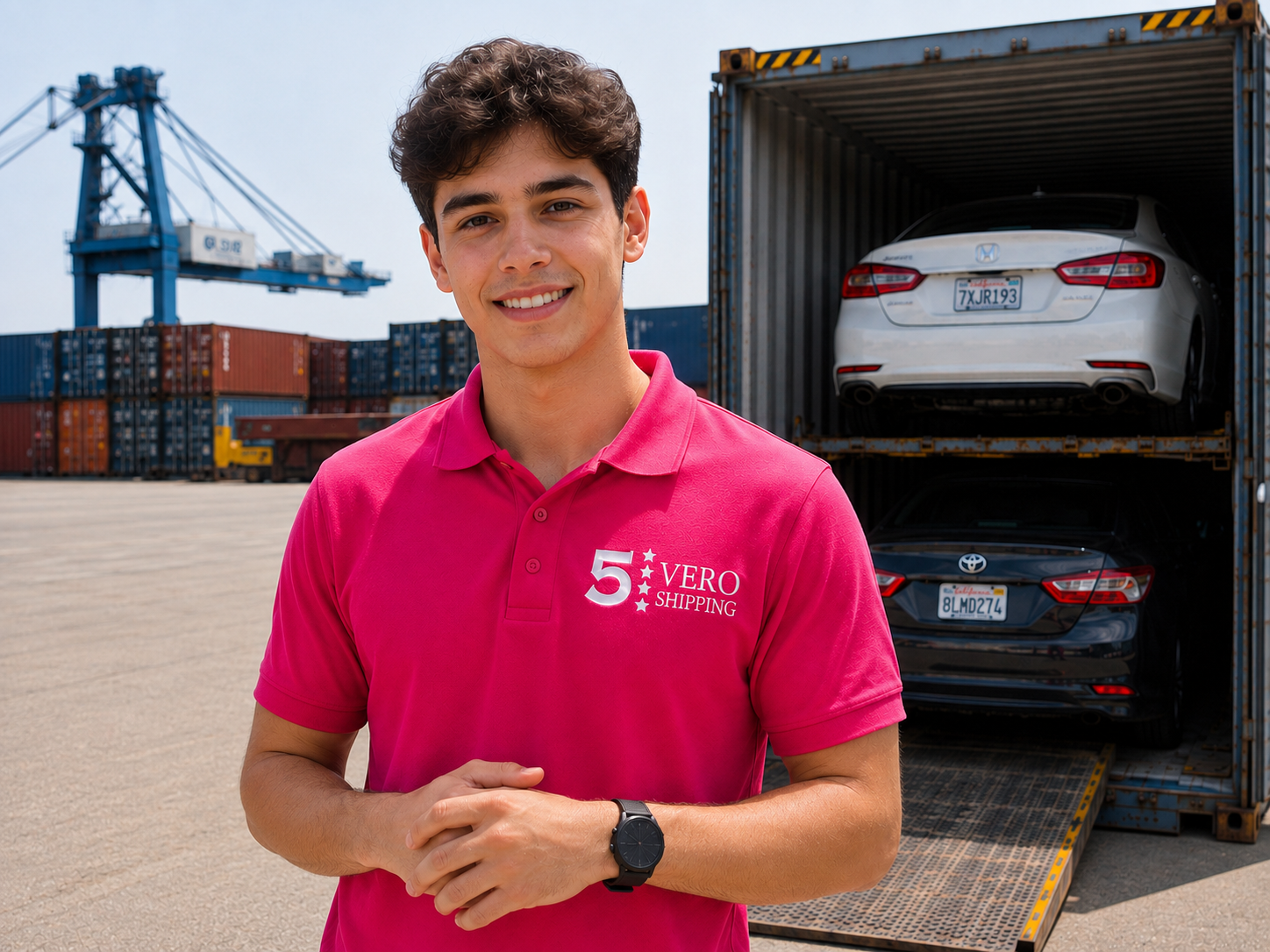
Vehicle Export USA: What Happens After You Buy a Car Until It Clears U.S. Export?
13 Aug 2026
Buying a vehicle in the United States is only the beginning of the international export process.
For buyers purchasing cars from Copart, IAA, Manheim, dealerships, or private sellers, the most important question is often:
What happens after I buy the vehicle and before it is allowed to leave the United States?
Vehicle Export USA involves several connected stages, including vehicle release, auction pickup, inland transportation, title review, vehicle receiving, export documentation, container preparation, port delivery, and final U.S. export processing.
Understanding this process before purchasing a vehicle can help international buyers reduce delays, unexpected storage charges, missed vessel schedules, and documentation problems.
VERO Shipping coordinates vehicle pickup, inland transportation, vehicle handling, export documentation, container loading, and international shipping from the United States.
Learn more about VERO Shipping USA – Copart & IAA Vehicle Export
1. The Vehicle Is Purchased
The export process begins once the buyer successfully purchases the vehicle.
Vehicles may be purchased from:
-
Copart
-
IAA
-
Manheim
-
Dealerships
-
Private sellers
-
Insurance auctions
-
Wholesale automotive sellers
Before transportation begins, important information should be confirmed, including:
-
VIN
-
Auction lot number
-
Pickup location
-
Release status
-
Running or non-running condition
-
Keys availability
-
Vehicle dimensions
-
Ownership document status
International buyers should not assume that purchasing a vehicle automatically means it is ready for export.
2. Vehicle Release Must Be Confirmed
Before a transporter can collect the vehicle, the auction or seller normally needs to release it.
Possible delays can occur because of:
-
Pending auction payment
-
Missing authorization
-
Vehicle release restrictions
-
Seller documentation delays
-
Incorrect buyer information
-
Storage or gate issues
The inland transportation team should confirm that the vehicle is actually available before dispatching a truck.
This prevents wasted trips and unnecessary transportation charges.
For buyers experiencing problems after purchasing from an auction, see:
10 Problems After Buying from Copart & IAA
3. USA Inland Vehicle Transportation Begins
Once the vehicle is released, transportation is arranged from the auction or seller to the appropriate U.S. export or loading facility.
The distance may be short or may cross several states.
A vehicle purchased in:
-
Texas
-
Florida
-
Georgia
-
New Jersey
-
California
-
Colorado
-
Illinois
-
Pennsylvania
may require completely different transportation planning.
Running vehicles are generally easier to load than non-running or heavily damaged vehicles.
Salvage cars may require:
-
Winch-equipped carriers
-
Forklift assistance
-
Special loading instructions
-
Additional clearance
-
Special handling at pickup
VERO coordinates vehicle collection and inland transportation as part of the export process.
Read more about VERO Shipping USA services
4. The Vehicle Arrives at the Export Facility
When the vehicle arrives at the export facility, it should be checked before progressing to the next stage.
Typical receiving checks include:
-
VIN verification
-
Visible exterior condition
-
Vehicle location
-
Keys
-
Loose parts
-
Auction paperwork
-
Vehicle operability
-
Obvious transportation damage
Photographs may also be taken to document the vehicle's condition upon arrival.
This is especially important for salvage, luxury, exotic, and high-value vehicles.
You can also read:
USA Vehicle Storage & Secure Handling – Copart, IAA & Manheim
5. The VIN Must Match the Documents
One of the most basic but important Vehicle Export USA checks is VIN verification.
The VIN appearing on the vehicle should match the VIN shown on:
-
Ownership documents
-
Shipping records
-
Auction paperwork
-
Export documentation
-
Container documentation
A VIN discrepancy can stop or delay an export shipment.
This is why document review should not be postponed until the vehicle is already at the port.
6. The Vehicle Title or Ownership Document Is Reviewed
The physical vehicle and its ownership document are two separate parts of the export process.
Depending on the state and vehicle, a buyer may receive documentation such as:
-
Clean Title
-
Salvage Title
-
Rebuilt Title
-
Certificate of Title
-
Salvage Certificate
-
Other state-issued ownership documents
The exact document should be reviewed before the shipment is treated as export-ready.
A vehicle sitting at a U.S. loading facility does not automatically mean that it can immediately be exported.
For more information about title-related export problems, read:
Copart Missing Title & Export Hold: What Buyers Should Know
7. Export Eligibility Is Checked
Vehicle Export USA is not simply about having possession of the vehicle.
The exporter must also determine whether the vehicle and its available documents can proceed through the applicable export process.
Questions may include:
-
Is the ownership document acceptable?
-
Does the VIN match?
-
Is there any documentation hold?
-
Are additional approvals required?
-
Is the vehicle eligible for the planned export method?
-
Is the document original where required?
-
Are the buyer and consignee details correct?
Problems discovered early are normally easier to solve than problems discovered after the container has already been delivered to the port.
8. Export Information Is Prepared
Once the vehicle documentation is ready, the shipment information can be prepared for export processing.
Depending on the shipment, this may involve:
-
Vehicle information
-
VIN details
-
Ownership information
-
Exporter information
-
Consignee information
-
Shipping instructions
-
Ocean carrier information
-
Port information
-
Container details
Accuracy is critical.
A single incorrect VIN digit or inconsistent ownership detail can create unnecessary delays.
9. The Vehicle Waits for Container Planning
International buyers frequently purchase more than one vehicle.
Instead of shipping each vehicle separately, several vehicles may be consolidated into one container.
This means one vehicle may arrive at the export facility before the others.
During this period, the vehicle may remain in secure storage while:
-
Additional vehicles arrive
-
Titles are completed
-
Vessel space is arranged
-
Container loading is planned
-
Export documentation is completed
Professional vehicle storage and inventory control are therefore an important part of the export chain.
Learn about VERO USA Vehicle Storage & Secure Handling
10. Container Loading Is Planned
Container loading requires more than simply driving vehicles inside.
The team needs to consider:
-
Vehicle dimensions
-
Vehicle weight
-
Running condition
-
Damage condition
-
Ground clearance
-
Loading sequence
-
Tie-down positions
-
Number of vehicles
-
Weight distribution
Pickup trucks, SUVs, luxury vehicles, salvage vehicles, and non-running cars may all require different loading techniques.
For high-value cars, careful loading and securing becomes even more important.
Read about Luxury & Exotic Car Container Loading in the USA
11. Vehicles Are Secured Inside the Container
Once positioned, the vehicles must be secured to reduce movement during ocean transportation.
Depending on the loading method, securing may involve:
-
Heavy-duty straps
-
Wheel restraints
-
Timber supports
-
Blocking
-
Multiple tie-down points
-
Specialized loading structures
The goal is to reduce vehicle movement during handling and ocean transportation.
Poor securing can increase the risk of vehicle damage.
12. Container Documentation Is Finalized
Once loading is completed, the shipment information must be coordinated with the ocean carrier and export documentation team.
Typical information may include:
-
Container number
-
Vehicle VINs
-
Exporter details
-
Consignee details
-
Destination port
-
Shipping instructions
-
Carrier booking information
Documentation consistency becomes especially important when several vehicles are loaded into the same container.
13. The Container Moves to the U.S. Port
After loading, the container is transported to the designated U.S. export port.
VERO Shipping works with vehicle export routes through major U.S. gateways including Savannah, Houston, New Jersey, and other ports depending on the destination and shipment plan.
Port delivery must be coordinated with:
-
Carrier receiving dates
-
Terminal appointments
-
Documentation deadlines
-
Vessel schedules
-
Export requirements
Missing a terminal or documentation cutoff may result in the container moving to a later sailing.
14. U.S. Export Processing Must Be Completed
The final stage before vessel departure is completion of the required U.S. export procedures.
This is an important distinction:
The container reaching the port does not automatically mean that the vehicles have cleared U.S. export requirements.
The vehicle documentation and export information must be accepted through the applicable process before the shipment can proceed.
If there is a title, VIN, filing, ownership, or documentation problem, the shipment may be delayed even though the container is physically at the port.
15. The Vehicle Is Ready for International Ocean Shipping
Once the documentation, export processing, carrier requirements, and port procedures are completed, the container can proceed toward vessel loading.
At this point, the Vehicle Export USA stage transitions into international ocean transportation.
Customers can then follow the shipment as it moves toward the destination country.
VERO customers can also learn about vehicle and container tracking here:
Track Your Cars, Containers, Photos and Vehicle Shipping
Vehicle Export USA Process at a Glance
Vehicle Purchase → Vehicle Release → Auction Pickup → USA Inland Transportation → Export Facility → VIN Verification → Title Review → Export Eligibility → Documentation → Vehicle Storage → Container Loading → Securing → Port Delivery → U.S. Export Processing → Vessel Departure
The most important lesson is simple:
Vehicle Export USA is not one action. It is a connected logistics and documentation process.
A problem at any stage can affect the entire shipment.
Why International Buyers Need Export Coordination
International buyers are often thousands of miles away from the vehicle they purchased.
They may not personally see:
-
Auction pickup
-
Vehicle arrival
-
Title processing
-
Vehicle inspection
-
Container loading
-
Port delivery
For this reason, good export coordination should provide visibility throughout the entire process.
VERO Shipping supports international vehicle buyers with:
-
Copart and IAA vehicle pickup
-
USA inland vehicle transportation
-
Vehicle receiving
-
Vehicle photography
-
Secure handling and storage
-
Title and export documentation coordination
-
Container loading
-
Ocean freight
-
International vehicle shipping
Visit VERO Shipping USA – Copart & IAA Vehicle Export
Frequently Asked Questions About Vehicle Export USA
1. What happens immediately after I buy a vehicle in the USA?
The first steps normally include confirming payment, vehicle release, pickup availability, and transportation from the seller or auction to the appropriate export facility.
2. Can VERO pick up vehicles from Copart?
Yes. VERO coordinates vehicle pickup from Copart locations as part of its USA vehicle logistics services.
3. Can VERO pick up vehicles from IAA?
Yes. Vehicle collection can also be coordinated from IAA locations.
4. Can non-running vehicles be transported?
Yes, but non-running and heavily damaged vehicles may require specialized loading or transportation equipment.
5. Does buying a vehicle mean it is automatically exportable?
No. Vehicle purchase and export eligibility are separate matters. Ownership documents and export requirements should be reviewed.
6. Why is the vehicle title important?
The title or ownership document is a key part of the U.S. vehicle export process. Problems with the document can delay or prevent export processing.
7. Can a vehicle be transported before the title arrives?
In some situations the vehicle may be transported to an export facility while documentation is still being completed, but it should not be assumed to be export-ready until the required documents are available.
8. What happens if the VIN on the title does not match the vehicle?
The discrepancy should be investigated and corrected before export processing continues.
9. Does VERO inspect vehicles when they arrive?
Vehicle receiving may include VIN verification, condition checking, photography, and documentation of visible vehicle condition.
10. Why are photographs important before shipping?
Photos help establish the vehicle's condition before container loading and ocean transportation.
11. Can multiple auction vehicles be stored while waiting for a container?
Yes. Buyers often consolidate several vehicles into one shipment, so vehicles may need to remain at the export facility until the complete shipment is ready.
12. How many cars fit inside a container?
The number depends on the vehicle dimensions, type, condition, and loading configuration. It cannot always be guaranteed before the vehicles are evaluated.
13. Can damaged vehicles be loaded into containers?
Yes. Salvage and damaged vehicles can often be loaded, but specialized equipment and loading procedures may be required.
14. What is USA inland vehicle transportation?
It is transportation of the vehicle from its U.S. pickup location to the export yard, loading facility, or port.
15. What happens if the vehicle is far from the port?
A transporter moves it by road to the selected export location. Distance and vehicle condition affect the inland transportation plan.
16. Can VERO arrange inland transportation across the USA?
Yes. VERO's USA services include coordinating vehicle transportation from auctions, dealerships, sellers, and other locations.
17. What happens before container loading?
The vehicle may undergo receiving, VIN checking, document coordination, export preparation, and loading planning.
18. Why is container loading important?
Improper positioning or securing can increase the risk of movement and vehicle damage during transportation.
19. Are luxury cars handled differently?
High-value, luxury, exotic, and low-clearance vehicles may require additional loading and protection procedures.
20. When is the container delivered to the port?
After loading, documentation coordination, and carrier scheduling are sufficiently complete for terminal delivery.
21. Does port delivery mean the car has cleared export?
No. Port delivery and completion of U.S. export requirements are separate stages.
22. What can delay U.S. vehicle export?
Common reasons include missing titles, VIN discrepancies, documentation errors, export holds, missed carrier deadlines, or shipment information problems.
23. Can a missed cutoff delay the vessel?
Yes. Missing a terminal or documentation cutoff may cause a shipment to move to a later sailing.
24. When does ocean transit officially begin?
Ocean transit begins after the container has been accepted for shipment and loaded for the international voyage.
25. Can I track my vehicle before the vessel departs?
Depending on the logistics provider, customers may receive pickup, receiving, loading, and shipment updates before vessel departure.
26. Does VERO provide vehicle and container tracking?
VERO provides shipment tracking tools for customers moving vehicles through its logistics network.
Read the VERO Vehicle & Container Tracking Guide
27. Does VERO handle only auction vehicles?
No. Vehicles may also be collected from dealerships, private sellers, storage facilities, and other automotive locations.
28. Can VERO coordinate the process from auction pickup to international shipping?
Yes. Depending on the route and shipment requirements, VERO can coordinate inland transportation, receiving, storage, documentation, container loading, and international shipping.
29. What information should I send before requesting a vehicle export quote?
Provide:
-
VIN or auction link
-
Pickup location
-
Vehicle condition
-
Running or non-running status
-
Intended destination
30. What is the biggest mistake international buyers make?
One common mistake is assuming that winning an auction automatically means the vehicle is ready for international export. Transportation, documentation, title status, export requirements, and shipping planning all need to be coordinated.
Related VERO Shipping Resources
VERO Shipping USA – Copart & IAA Vehicle Export
10 Problems After Buying from Copart & IAA
USA Vehicle Storage & Secure Handling
How to Choose a Car Shipping Company in USA
Copart Missing Title & Export Hold
Track Your Cars, Containers & Vehicle Shipping
Search Topics
Vehicle Export USA, USA Vehicle Export, Export Cars from USA, Car Export USA, Vehicle Export Company USA, Copart Vehicle Export USA, IAA Vehicle Export USA, USA Car Export Documentation, USA Inland Vehicle Transportation, Vehicle Export from USA to UAE, Vehicle Export from USA to Oman, International Vehicle Shipping from USA.


