

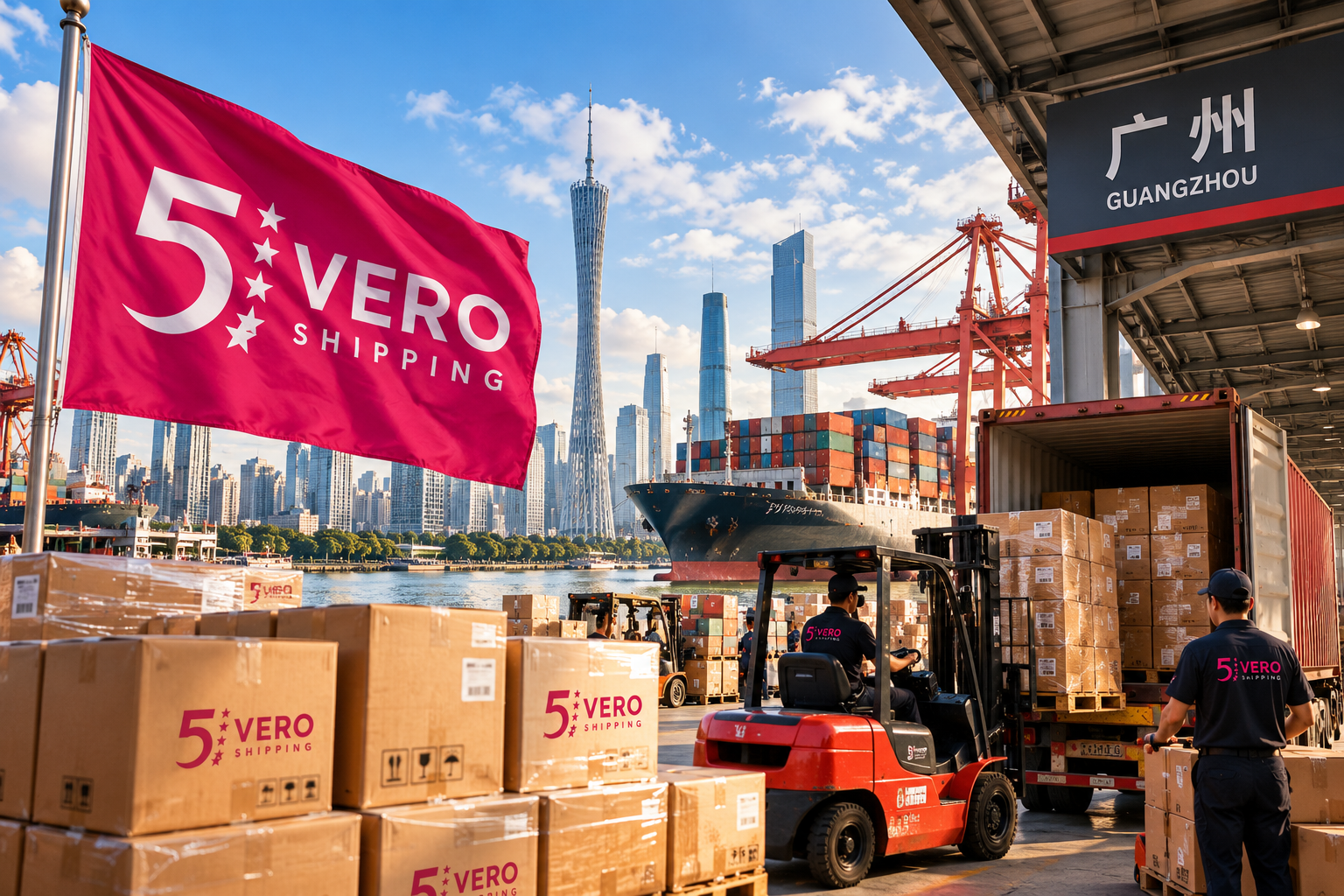
How to Combine Orders from Multiple Suppliers in China into One Shipment
20 Oct 2026
Buying from China does not always mean buying everything from one factory.
Many international buyers work with several suppliers at the same time. A retailer may purchase packaging from one factory, electronics from another, accessories from a third supplier, and promotional products from a fourth. An importer may even have ten or more orders being prepared in different cities across China.
The challenge starts when these orders are ready.
Should every supplier ship internationally on their own?
For many buyers, the better solution is to combine orders from multiple suppliers in China into one shipment.
This process is known as cargo consolidation or multi-supplier consolidation. Instead of sending every order separately to the destination country, suppliers deliver their goods to one receiving warehouse in China. The cargo is recorded, organized, stored temporarily, and prepared for one international shipment.
For importers, wholesalers, retailers, e-commerce businesses, project suppliers, and companies purchasing regularly from China, this can create a much simpler supply chain.
VERO Shipping supports this model by connecting China warehouse operations with international freight services for customers shipping to destinations worldwide.
What Is Multi-Supplier Cargo Consolidation in China?
Multi-supplier consolidation means collecting orders from several Chinese suppliers at one warehouse before arranging international transportation.
Imagine that your company buys from five different factories:
- Supplier A produces LED lighting.
- Supplier B manufactures packaging.
- Supplier C supplies automotive accessories.
- Supplier D produces small electronic products.
- Supplier E manufactures promotional items.
Without consolidation, you could end up with five separate international shipments.
That means multiple freight arrangements, different documents, different departure schedules, and potentially several destination clearance processes.
With consolidation, all five suppliers can instead deliver their goods to one warehouse in China.
Once the cargo has arrived, the warehouse can organize the orders and prepare them for shipment together.
The concept is simple:
Multiple suppliers → One warehouse → One consolidated shipment → Final destination.
This can significantly simplify the logistics process.
Why Consolidate Orders Instead of Shipping Separately?
International freight involves more than simply moving a box from one country to another.
Every separate shipment may involve documentation, handling, pickup coordination, freight charges, destination procedures, and communication between different parties.
When a buyer has many relatively small orders, shipping each one independently may not be the most practical approach.
Consolidation allows buyers to build a larger shipment before exporting.
For example, instead of arranging six small international shipments during the month, the buyer may collect the goods at one location and prepare a larger shipment once enough cargo is ready.
This can make freight planning easier and give the importer better visibility over the entire purchasing process.
Businesses building a supply chain from China can also explore China Warehouse Services for International Buyers for more information about receiving, storage, inspection and consolidation.
Step 1: Purchase from Your Suppliers Normally
The consolidation process does not require you to change the way you negotiate with suppliers.
You can continue purchasing directly from factories, manufacturers, trading companies, or other suppliers in China.
Before placing the order, confirm important commercial details such as:
- Product description
- Quantity
- Price
- Production time
- Carton dimensions
- Gross weight
- Packaging requirements
- Payment terms
- Domestic delivery responsibility
It is particularly useful to request estimated carton quantities, dimensions, and weight before the goods are completed.
This information helps the logistics team estimate how much space the cargo may require.
Once the supplier finishes production, instead of giving them an international delivery address, you provide the designated China warehouse address.
Step 2: Send Every Supplier to the Same Receiving Warehouse
Each supplier receives the warehouse delivery instructions.
The suppliers do not need to communicate with each other.
Supplier A simply delivers its cargo to the warehouse. Supplier B does the same. Then Supplier C, D, and E follow.
Each shipment should include a clear customer or shipment reference so the warehouse can identify which cargo belongs to which buyer.
This becomes especially important when a warehouse handles orders for several international customers.
A proper reference system helps prevent confusion between shipments.
The warehouse therefore becomes the central logistics point connecting your different suppliers.
Step 3: Receive and Record Each Delivery
When cargo reaches the warehouse, the receiving process begins.
Depending on the service arrangement, the warehouse can record basic information such as:
- Supplier name
- Arrival date
- Number of cartons received
- Shipment reference
- General cargo description
- Visible condition of the cartons
This creates an organized record of what has arrived.
For example, suppose you are waiting for orders from eight suppliers. The warehouse report shows that six suppliers have delivered their cargo. You immediately know that two orders are still pending.
Instead of contacting eight suppliers individually just to understand the overall shipping status, the consolidation process gives you a central view of the cargo being prepared.
Step 4: Check Carton Quantity and Visible Condition
Receiving cargo should involve more than simply unloading it.
The warehouse can check the number of cartons delivered against the information provided by the supplier.
The receiving team may also notice visible packaging problems such as:
- Crushed cartons
- Torn boxes
- Wet packaging
- Open cartons
- Missing external labels
- Clearly damaged outer packaging
This provides another checkpoint before the cargo leaves China.
However, there is an important distinction.
A warehouse receiving check is not the same as a professional product inspection.
Technical quality inspection, factory audits, product testing, certification verification, or laboratory testing are separate services.
The warehouse receiving process mainly helps confirm what arrived and whether there are obvious external problems with the shipment.
Step 5: Receive Photos or Videos of the Cargo
When the buyer is located outside China, visibility becomes extremely important.
Photos or videos taken when cargo reaches the warehouse can help the buyer understand the condition and quantity of the shipment before export.
Depending on the agreed warehouse service, photos may show:
- Delivered cartons
- Packaging condition
- Shipping labels
- Pallets
- Product packaging
- General cargo appearance
If something looks wrong, the buyer can contact the supplier while the cargo is still in China.
This is valuable because resolving a supplier issue before export is normally much easier than discovering the problem after the goods arrive thousands of kilometers away.
Step 6: Store the Cargo While Waiting for Other Suppliers
One supplier may finish production today while another supplier needs another five days. That is normal.
The purpose of consolidation is to allow different orders to arrive at different times and wait at one location until the complete shipment is ready.
Under the planned VERO China consolidation service, warehouse storage can include up to 7 days free, subject to the agreed shipment terms.
After the free period, warehouse storage charges may apply.
This is why buyers should coordinate supplier production dates carefully.
If one supplier is expected to take another month, it may not make sense to keep all the other cargo waiting for that order.
Sometimes the better decision is to ship the available goods and include the delayed supplier in the next consolidation.
Good consolidation therefore requires both warehouse management and timing.
International buyers can learn more about the warehouse process in our China Warehouse Services Guide.
Step 7: Identify Missing or Delayed Orders
One of the biggest benefits of using a central warehouse is knowing what has not arrived.
Suppose your shipping plan includes cargo from ten suppliers. Nine orders reach the warehouse. One does not.
Before loading or booking the final shipment, the missing supplier can be identified and contacted.
The buyer can then decide whether to:
- Wait for the supplier.
- Ask the supplier to expedite delivery.
- Ship without that order.
- Move the delayed order to the next shipment.
Without a central consolidation process, tracking multiple suppliers can become much more difficult.
Step 8: Consolidate the Cargo
Once the required orders have arrived, the actual consolidation process begins.
The warehouse organizes the different deliveries into one planned export shipment.
Depending on the cargo and shipping method, this may involve:
- Grouping cartons
- Sorting supplier orders
- Repacking when required
- Replacing unsuitable outer packaging
- Adding shipment labels
- Palletizing when necessary
- Measuring cargo
- Confirming final weight
- Preparing the shipment for export handling
The objective is not simply to put random cartons together.
The objective is to create an organized shipment that can move efficiently through the international logistics process.
Can Different Types of Products Be Combined?
Often yes, but not always.
Compatibility depends on the products themselves, packaging, transportation method, destination regulations, and whether any items are classified as restricted or dangerous goods.
For example, ordinary garments, household accessories, packaging materials, and many general commercial products may be easier to consolidate.
Other goods require additional attention. These may include:
- Lithium batteries
- Chemicals
- Liquids
- Aerosols
- Magnetic products
- Certain electronic products
- Dangerous goods
- Temperature-sensitive cargo
- Restricted commodities
Buyers should provide accurate product descriptions before arranging transportation.
A product should never be declared as ordinary cargo simply to avoid dangerous-goods procedures.
Step 9: Choose Air Freight or Sea Freight
After consolidation, the buyer needs to decide how the shipment should leave China.
The two main options are air freight and sea freight.
Air Freight
Air freight may be suitable when the shipment is urgent, relatively small, or contains higher-value goods where faster transit is important.
Examples may include:
- Samples
- Electronics
- Spare parts
- Urgent stock
- Small commercial orders
- Time-sensitive products
Air freight is normally calculated using actual weight or volumetric weight, depending on which is greater.
Because of this, carton dimensions can have a major effect on the final freight cost.
Reducing unnecessary packaging volume can sometimes make a significant difference.
Sea Freight
Sea freight may be more suitable for larger commercial orders where transit time is less critical.
As cargo volume increases, ocean freight often becomes more practical.
Depending on shipment size and destination, the cargo may move through an appropriate consolidated ocean service or as a full container.
The correct option depends on factors such as cargo volume, weight, product type, destination, shipping schedule, cost, and required delivery time.
For a detailed comparison, read Air Freight vs Sea Freight from China.
When Does a Full Container Make Sense?
As the buyer's purchasing volume grows, the consolidated cargo may eventually become large enough for a full container.
This can be particularly useful for wholesalers and distributors purchasing regularly from several factories.
Instead of thinking of each supplier as an individual shipment, the buyer can think of the entire month as one purchasing cycle.
For example:
Week 1: Suppliers begin production.
Week 2: First orders arrive at the warehouse.
Week 3: Additional suppliers deliver.
Week 4: Remaining cargo arrives and the shipment is prepared.
Once enough suitable cargo is available, a container can be planned according to the actual volume and loading requirements.
Businesses shipping smaller packages and cartons can also review How to Ship Cartons and Packages from China Worldwide.
Consolidation Is Useful for More Than Large Importers
A common misconception is that consolidation is only useful for major companies ordering hundreds of cartons.
That is not necessarily true. Smaller businesses can benefit as well.
Consider an online retailer that buys products from four factories. None of the orders is particularly large.
Shipping every order internationally on its own may create unnecessary complexity.
By sending the four orders to one warehouse, the retailer can create one organized export shipment.
The same model can work for:
- Amazon and marketplace sellers
- Independent retailers
- Spare-parts traders
- Building-material suppliers
- Automotive businesses
- Promotional-product companies
- Electronics traders
- Online stores
- Wholesalers
- Project procurement companies
The important factor is not simply company size.
It is whether combining multiple purchases creates a more efficient logistics process.
Why Guangzhou Is Useful for China Cargo Consolidation
Guangzhou is one of China's major commercial and logistics centers and is surrounded by important manufacturing areas in Guangdong Province.
Buyers sourcing from Guangzhou, Foshan, Dongguan, Shenzhen, and nearby industrial regions can use South China as a practical consolidation base.
This is especially useful for businesses purchasing different product categories from different factories.
Rather than allowing every factory to arrange international transportation independently, goods can first move domestically to the consolidation point.
From there, the complete international shipment can be planned.
VERO's China logistics model is designed around this concept: giving international buyers a receiving and consolidation point in China while VERO remains the customer's logistics contact.
For additional information about freight operations in Guangzhou, see Guangzhou International Freight Services.
What Information Should You Request from Every Supplier?
Before sending goods to the warehouse, ask suppliers to provide accurate shipment information.
At minimum, obtain:
- Supplier/company name
- Product description
- Number of cartons
- Carton dimensions
- Gross weight
- Total volume if available
- Expected completion date
- Expected warehouse delivery date
- Battery or dangerous-goods information
- Commercial invoice
- Packing list when available
Accurate information makes freight planning much easier.
For example, saying "20 boxes" is not enough to calculate transportation properly.
Twenty small cartons and twenty oversized cartons are completely different shipments.
Dimensions and weight matter.
Common Mistakes When Consolidating Orders in China
Consolidation can simplify logistics, but poor planning can create delays.
One common mistake is sending cargo without a clear customer reference.
Another is failing to tell the warehouse how many suppliers are expected.
Buyers should also avoid waiting indefinitely for one delayed factory while storage accumulates on cargo that arrived much earlier.
Incorrect product descriptions are another serious issue.
If a supplier says the shipment contains "accessories" but the cartons actually contain lithium batteries or another regulated commodity, the freight arrangement may need to change completely.
Communication is therefore essential.
The warehouse, logistics provider, buyer, and suppliers should all have the information necessary for their part of the shipment.
A Simple Example of China Consolidation
Imagine a UAE trading company purchasing from six Chinese suppliers.
The orders are:
- 15 cartons of auto accessories
- 20 cartons of packaging materials
- 8 cartons of tools
- 12 cartons of promotional items
- 10 cartons of household accessories
- 6 cartons of electronic products
Instead of arranging six separate international shipments, each supplier sends its order to the designated warehouse in China.
The warehouse records each delivery.
Photos are taken where agreed.
The buyer can see which suppliers have delivered and which orders remain pending.
Once the required cargo is available, the cartons are organized and prepared for international transportation.
The buyer then chooses the appropriate shipping method based on the combined shipment's size, weight, destination, urgency, and product type.
What started as six separate supplier orders becomes one coordinated international shipment.
That is the practical value of consolidation.
Shipping from China to Worldwide Destinations
China consolidation should not be limited to one destination market.
A buyer may be based in the UAE while selling products to customers in several countries.
Another company may purchase in China and ship directly to its overseas branch, distributor, warehouse, or customer.
The final destination could be in the Middle East, Africa, Europe, Asia, or another international market, subject to carrier availability, product acceptance, and destination regulations.
This is why the logistics plan should be built around the complete journey:
Supplier → China warehouse → Consolidation → Export → International transportation → Destination.
VERO Shipping works with international cargo movements and can coordinate logistics according to the origin, cargo type, shipping method, and destination.
Build a Smarter Supply Chain from China
Buying from multiple suppliers does not have to mean managing multiple international shipments.
A central consolidation warehouse can connect separate factory orders into one organized logistics process.
Suppliers deliver their goods locally in China.
The warehouse receives and records the cargo.
Orders can wait for other suppliers, with the agreed free-storage period applying before additional storage charges.
The cargo can then be organized, consolidated, and prepared for air or sea transportation depending on the buyer's requirements.
For businesses that purchase regularly from China, the benefit goes beyond one shipment.
A reliable consolidation system can become part of the company's long-term procurement strategy.
Instead of asking:
"How do I ship every supplier's order?"
The better question becomes:
"How do I bring all my suppliers into one shipping system?"
That is exactly what cargo consolidation is designed to achieve.
VERO Shipping – China Cargo Consolidation
VERO Shipping can support businesses purchasing from multiple suppliers in China through a coordinated logistics model that may include:
Supplier coordination → Warehouse receiving → Cargo records → Photos and videos → Temporary storage → Consolidation → Air or sea freight → Worldwide shipping.
Whether you are buying from two suppliers or building a regular purchasing network across China, consolidating orders before international shipping can give you better control, clearer visibility, and a more organized supply chain.
Explore more information about China Warehouse Services, compare Air Freight vs Sea Freight from China, or learn about Shipping Cartons and Packages from China Worldwide.
One warehouse. Multiple suppliers. One coordinated shipment. Worldwide delivery.


