

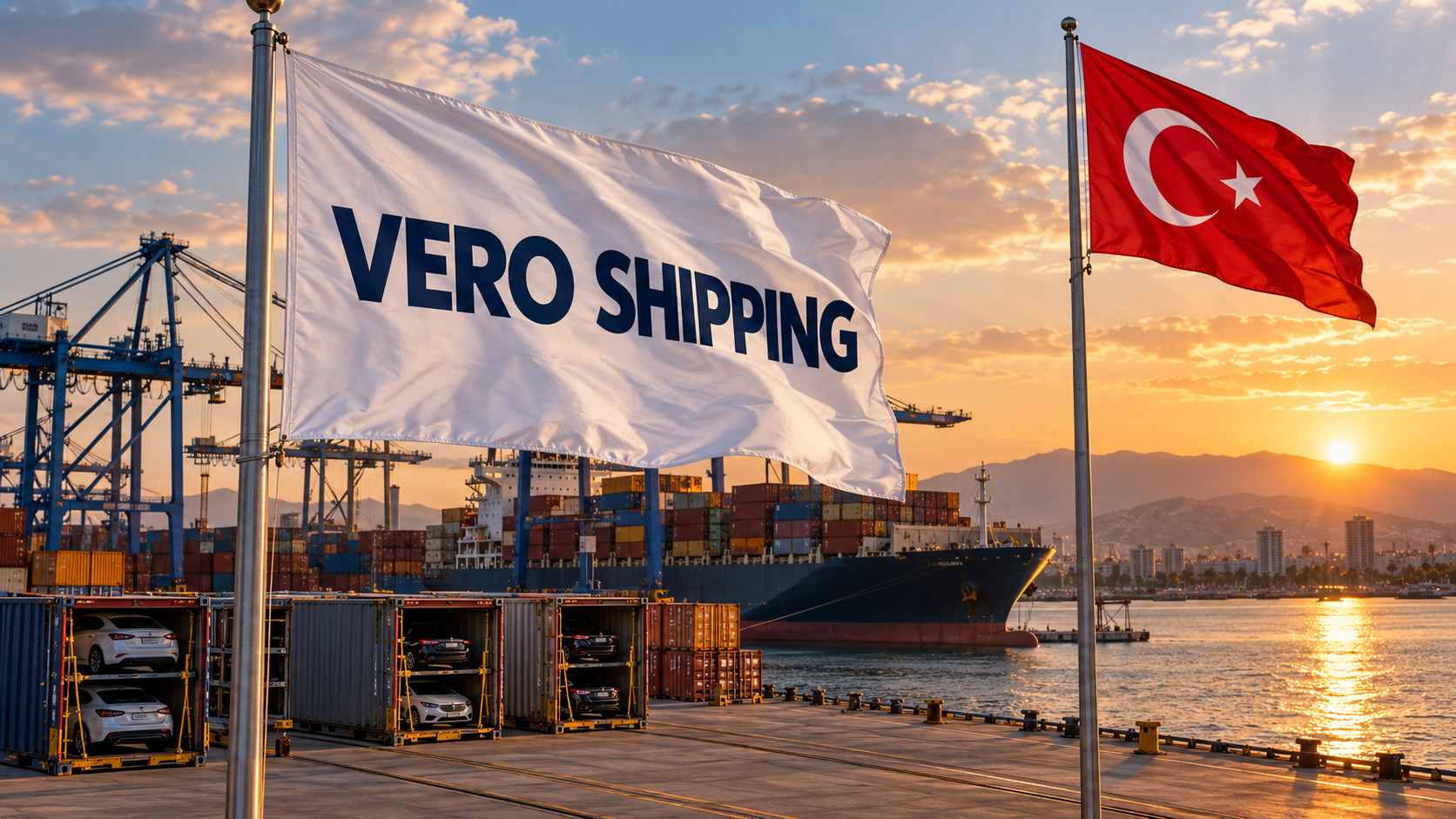
Why Four Auction Vehicles Do Not Always Fit in One 40-Foot Container to Mersin, Turkey
27 Sep 2026
Many buyers believe that every 40-foot container can always carry four auction vehicles from the United States to Mersin, Turkey. Four vehicles can often be loaded in one container, but this is not a fixed rule. The final capacity depends on the exact vehicle mix, including size, length, height, damage, running condition, and the loading method needed for each unit.
For buyers purchasing vehicles from Copart, IAA, Manheim, ADESA, dealers, or private sellers, the important question is not simply whether a 40-foot container holds four cars. The correct question is whether these four specific vehicles can be loaded safely, secured correctly, and shipped without creating unnecessary risk or delay.
VERO Shipping arranges car shipping from the USA to Mersin, Turkey by container. Every shipment is reviewed based on the actual vehicles before loading—not on the assumption that all containers automatically fit four units.
Four Vehicles Are a Goal, Not a Guarantee
A 40-foot container is a practical option for buyers shipping several vehicles together. When the shipment includes standard sedans, compact cars, or smaller crossovers, it may be possible to load four vehicles efficiently. This can reduce the freight cost per vehicle and make the shipment more economical.
However, container capacity changes when the vehicles are larger, damaged, non-running, modified, or difficult to move. In those cases, loading three vehicles safely may be the correct decision. A safe three-car load is always better than forcing four vehicles into a space that does not allow proper securing.
Large SUVs, Pickups, and Long Vehicles Take More Space
Large SUVs, full-size pickup trucks, vans, and long luxury cars can reduce the number of vehicles that fit in one 40-foot container. A container that can carry four standard sedans may only carry three large SUVs or a mixed shipment containing a pickup truck.
Length, width, height, wheelbase, and ground clearance must all be considered. One large vehicle can change the complete loading arrangement. For example, a long pickup may leave less usable space for the remaining vehicles, while a tall SUV may affect the positions available for other units.
Buyers should not purchase four vehicles based only on their auction photos. The loading plan should be reviewed once the VINs, vehicle details, and current condition information are available.
Damaged Auction Vehicles Require a Different Plan
Auction vehicles can have collision damage, flat tires, missing wheels, damaged suspension, locked steering, or body panels that extend beyond the normal shape of the vehicle. These issues can affect both the space required and the equipment needed to move the vehicle into the container.
A non-running vehicle may require a winch, forklift support, dollies, or special positioning. A vehicle with front-end, rear-end, or side damage may not fit safely in the same position as a normal running vehicle. Even small damage can affect the loading sequence and reduce the number of cars that can be shipped together.
Before pickup, buyers should provide the auction link, VIN number, available photos, and condition details. This helps the loading team identify possible issues early and avoid last-minute changes after the vehicles arrive at the warehouse.
Keys, Steering, Wheels, and Brakes Matter
A vehicle listed as “Keys: No” can still be shipped, but it may need special handling. Without keys, the vehicle may not start, steer normally, or move under its own power. This affects how the car is positioned and secured inside the container.
Missing wheels, flat tires, damaged brakes, or a locked steering wheel can also require extra equipment. These are not only mechanical issues; they are important loading factors. A car that cannot roll or steer properly may take more time, more space, and a different loading position.
Buyers should also review vehicle title and export eligibility before shipping. A vehicle should not be planned for an international container shipment until its documents and export status have been checked.
Height, Ground Clearance, and Modifications
Vehicle height is especially important for SUVs, vans, lifted trucks, and modified cars. A vehicle may appear suitable by length but still be too tall for the planned loading arrangement. Low sports cars and vehicles with suspension damage also need careful handling because of limited ground clearance.
Modified bumpers, wide body kits, large wheels, damaged fenders, and lowered suspension can all affect the loading process. It is not safe to force a vehicle into position simply to reach a four-vehicle target. The loading team must protect the vehicle and make sure it can be secured correctly for ocean transport.
Safe Securing Is More Important Than Maximum Quantity
Container loading is not only about fitting as many vehicles as possible. Each unit must be positioned in a stable way and secured for port handling and ocean transportation. The load must be balanced, and every vehicle must have enough space for proper lashing, blocking, and bracing.
Heavy vehicles cannot simply be placed anywhere. Weight distribution, axle weight, container balance, and available securing points must be considered. A poor loading decision can create risk to the vehicles and may cause delays before the container is released for shipment.
Professional loading means choosing the safest practical vehicle combination. Sometimes that means four vehicles; other times, it means three.
Plan the Vehicle Mix Before You Buy
The best time to consider container capacity is before finalizing auction purchases. A balanced shipment—such as smaller sedans with one medium SUV—may use the container space more efficiently. Several large SUVs, pickups, or heavily damaged cars may require a different plan.
VERO Shipping can arrange pickup from auctions, dealers, and sellers across the United States. After pickup, the vehicles can be moved to the loading location through U.S. inland transportation coordination, followed by export preparation, container loading, and ocean freight to Mersin Port.
Container shipping is the available method for this route. At destination, the consignee or its licensed broker handles Turkish import eligibility, customs clearance, duties, taxes, registration, and local requirements. VERO Shipping provides Mersin Port arrival coordination and shipment information so the receiving side can prepare before the container arrives.
Send the Vehicle Details Before Loading
To assess whether four auction vehicles can fit in one 40-foot container to Mersin, buyers should send the VIN numbers, auction links, vehicle photos, title status, pickup locations, and condition details. This allows the shipment to be reviewed properly before the container is prepared.
Four auction vehicles can fit in one 40-foot container when their size and condition allow safe loading. But when one vehicle is large, damaged, non-running, or difficult to position, three vehicles may be the safer and more realistic plan. Careful review before pickup helps control costs, protect the cargo, and keep the shipment moving smoothly from the United States to Mersin, Turkey.
Frequently Asked Questions
1. Can a 40-foot container always hold four cars to Mersin?
No. Four standard sedans or smaller vehicles may fit, but the final capacity depends on the actual size, condition, and loading requirements of the vehicles.
2. How many SUVs fit in a 40-foot container?
Many large SUVs require more space than sedans. In some cases, three SUVs are a safer loading plan than four vehicles.
3. Can a pickup truck be loaded with three cars?
It depends on the pickup’s length, height, and the size of the other cars. The vehicle list should be reviewed before confirming the loading plan.
4. Can non-running auction vehicles be shipped to Mersin?
Yes, non-running vehicles can often be shipped, but they may need a winch, forklift support, dollies, or special handling during loading.
5. Does “Keys: No” affect container loading?
Yes. A vehicle without keys may not start or steer normally, which can change the loading method and space needed.
6. Do damaged vehicles take more space inside a container?
They can. Damage to wheels, suspension, bumpers, or body panels may affect the vehicle’s position and the equipment needed to load it.
7. Can VERO Shipping pick up cars from Copart or IAA?
Yes. VERO Shipping can arrange pickup from auctions, dealers, and sellers in available U.S. locations before container loading.
8. What information is needed to check container capacity?
Please provide VIN numbers, auction links, photos, condition details, title status, and pickup locations for all vehicles.
9. Is container shipping available from the USA to Mersin?
Yes. VERO Shipping arranges vehicle container shipping from the United States to Mersin Port.
10. Does VERO Shipping handle customs clearance in Turkey?
Turkish customs clearance, taxes, duties, registration, and local import requirements are handled by the consignee or its licensed broker in Turkey.
11. Why should capacity be checked before buying vehicles?
Early review helps prevent loading delays, extra storage costs, unexpected changes, and unsafe attempts to fit too many vehicles in one container.
12. What happens if four vehicles do not fit safely?
VERO Shipping will recommend the safest available loading arrangement, which may be three vehicles in one 40-foot container.
/p>

