

Why Shipping Costs Rose Worldwide After the Strait of Hormuz Crisis: Complete 2026 Guide for Importers and Businesses
19 Jul 2026
The global shipping industry has always been sensitive to geopolitical events, but few maritime routes have as much influence on freight costs as the Strait of Hormuz. Whenever tensions rise in this strategic waterway, shipping companies, importers, exporters, and consumers around the world quickly feel the financial impact.
Following the recent Strait of Hormuz crisis, international freight rates increased across multiple trade routes. Whether businesses were shipping vehicles from the United States, transporting commercial cargo to the Middle East, or importing goods into the UAE and Oman, logistics costs rose significantly.
Understanding why shipping prices increased helps businesses make better decisions, plan their supply chains more effectively, and reduce unexpected transportation expenses.
⸻
Why Is the Strait of Hormuz So Important?
The Strait of Hormuz is one of the world’s busiest maritime passages. It connects the Arabian Gulf with the Gulf of Oman and the Arabian Sea, serving as a critical gateway for global trade.
Every day, thousands of vessels—including container ships, oil tankers, LNG carriers, and vehicle transport vessels—pass through this narrow shipping lane.
Because so much international cargo relies on this route, even temporary security concerns can disrupt global logistics.
⸻
What Happened During the Crisis?
When regional tensions escalated around the Strait of Hormuz, shipping companies immediately reassessed operational risks.
Although many vessels continued operating, carriers implemented additional safety measures, including:
* Enhanced maritime security procedures
* Higher insurance requirements
* Route monitoring
* Operational contingency planning
* Increased voyage risk assessments
Even without a complete closure of the strait, uncertainty alone was enough to affect shipping markets worldwide.
⸻
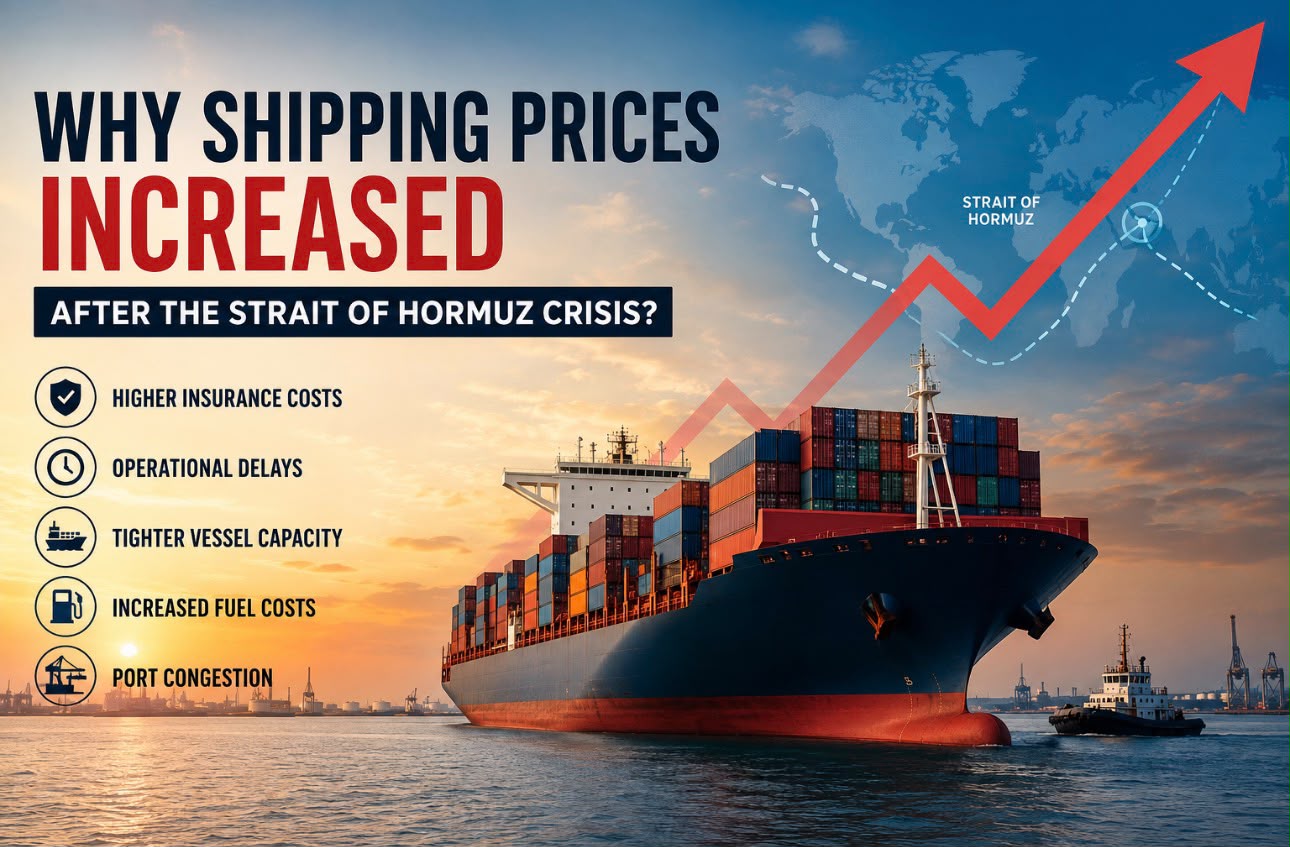
Why Did Shipping Prices Increase?
Several factors combined to push freight rates higher.
1. Increased Marine Insurance Costs
Insurance companies raised war-risk premiums for vessels entering or passing near high-risk areas.
These additional insurance expenses were transferred directly to shipping companies, which then reflected the increased costs in customer freight quotations.
⸻
2. Operational Delays
Security inspections, convoy coordination, weather monitoring, and route adjustments all contributed to longer transit schedules.
When ships spend more time completing voyages, operating costs naturally increase.
⸻
3. Vessel Capacity Became Tighter
Some shipping lines temporarily reduced available sailings while reviewing operational risks.
Fewer available vessels combined with strong customer demand created upward pressure on freight prices.
Whenever shipping capacity becomes limited, freight rates typically rise.
⸻
4. Higher Fuel Consumption
Some vessels adjusted sailing speeds or altered routes to improve operational flexibility.
Longer sailing distances and schedule changes increased fuel consumption, adding another layer of cost for shipping companies.
⸻
5. Port Congestion
Whenever shipping schedules become disrupted, vessels often arrive at ports in clusters rather than according to normal schedules.
This creates congestion at terminals, slower unloading operations, and longer container dwell times.
Port congestion increases storage costs, trucking delays, and handling charges.
⸻
How Did This Affect Vehicle Shipping?
Vehicle shipping experienced similar challenges.
Companies exporting cars from the United States to destinations such as:
* UAE
* Oman
* Iraq
* Jordan
* Saudi Arabia
faced higher transportation costs due to increased ocean freight charges and insurance premiums.
Container shipping was particularly affected because of limited container availability and stronger global demand.
⸻
Which Shipping Routes Were Most Affected?
Trade routes involving the Middle East experienced the greatest impact.
Examples include:
* USA to UAE
* USA to Oman
* Europe to Gulf countries
* Asia to Middle East
* Gulf to East Africa
However, because international shipping networks are interconnected, rate increases also spread to many other global destinations.
⸻
How Long Did the Higher Prices Last?
Shipping markets rarely return to normal immediately after geopolitical events.
Even after security conditions improve, freight prices may remain elevated because:
* Shipping schedules require time to stabilize.
* Containers need to be repositioned.
* Port congestion takes weeks to clear.
* Insurance companies gradually reassess risk levels.
As a result, elevated shipping costs often continue for several weeks or even months after a crisis.
⸻
How Businesses Can Reduce Shipping Costs
Importers can reduce financial exposure by following several practical strategies.
Book Shipments Early
Early bookings usually provide more vessel options and better freight pricing.
Last-minute shipments often face premium rates during periods of market uncertainty.
⸻
Work With Experienced Freight Forwarders
Professional logistics providers monitor carrier schedules daily and can identify the most cost-effective shipping options.
They also help customers avoid unnecessary delays and unexpected fees.
⸻
Consolidate Shipments
Shipping multiple vehicles or cargo items together in containers often reduces the average transportation cost per shipment.
Container consolidation remains one of the most effective ways to improve shipping efficiency.
⸻
Prepare Documentation in Advance
Missing paperwork can cause customs delays, storage charges, and additional handling fees.
Preparing complete shipping documents before cargo departs helps reduce unnecessary expenses.
⸻
Monitor Market Conditions
Freight markets change rapidly.
Businesses that monitor shipping trends can choose the best booking window instead of shipping during peak pricing periods.
⸻
Will Shipping Prices Return to Normal?
In most cases, yes.
Freight markets naturally adjust once geopolitical risks decrease and vessel schedules return to normal.
However, prices may not immediately return to previous levels because shipping companies continue managing operational costs, fuel expenses, insurance rates, and global demand.
Businesses should therefore expect gradual stabilization rather than an overnight reduction in freight costs.
⸻
Final Thoughts
The Strait of Hormuz crisis demonstrated how closely global shipping depends on stable maritime trade routes. Even limited regional tensions can increase freight costs through higher insurance premiums, operational delays, tighter vessel capacity, and port congestion.
For importers and exporters, staying informed about market conditions and working with experienced shipping partners is the best way to reduce risk and control logistics expenses.
As global supply chains continue evolving, businesses that plan shipments strategically and adapt quickly to changing market conditions will remain more competitive while minimizing transportation costs.
Keywords: Strait of Hormuz shipping, shipping cost increase, container shipping prices 2026, vehicle shipping USA to UAE, freight rates after Hormuz crisis, international shipping costs, ocean freight, shipping delays, logistics Middle East, global shipping market.


